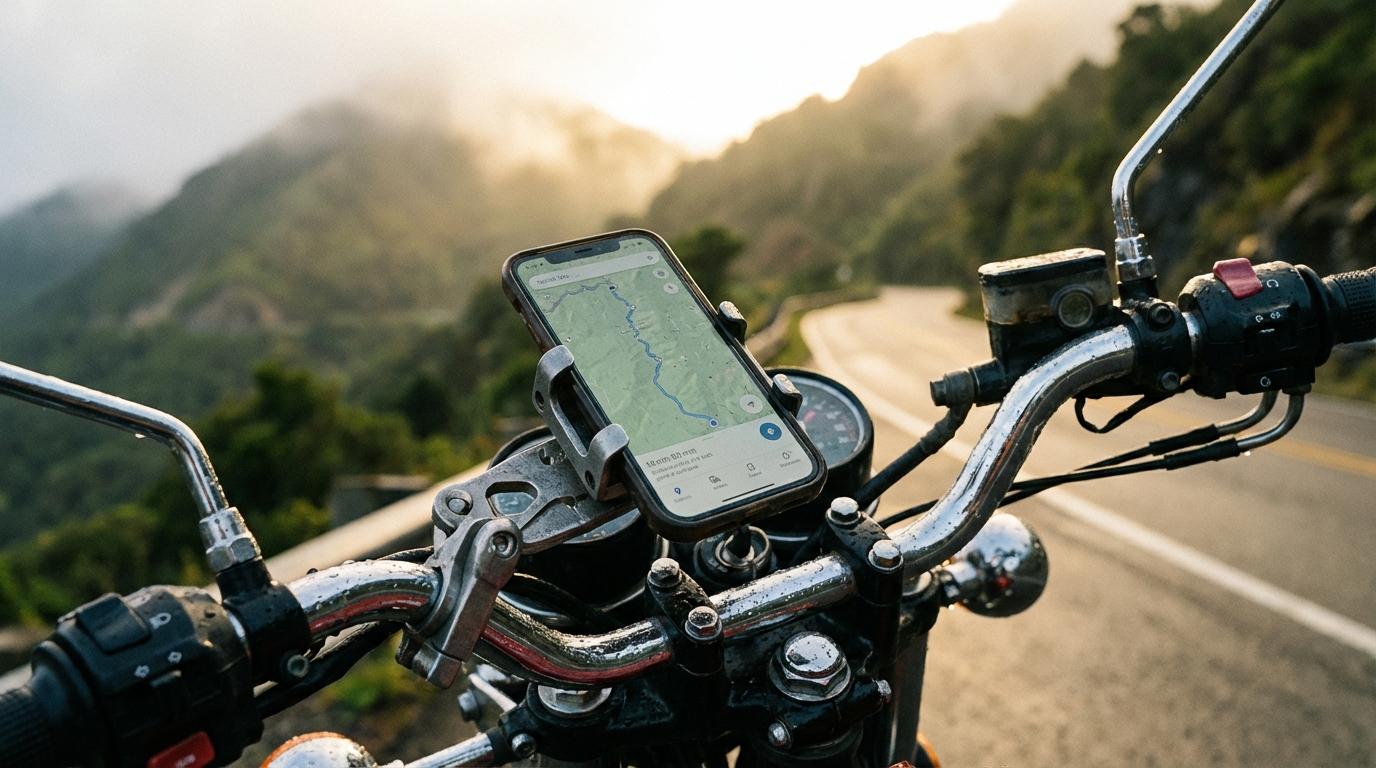
At 4,000 RPM, a phone clamped to a motorcycle’s handlebars makes a rattle like a zipper tearing through denim. You won’t notice it at first, because the engine and the wind in your helmet are louder and you’re watching the road anyway. The vibration still runs through the bars and the mount into the phone, and it shakes something loose that you only find out about a few days later, when every photo you take comes out blurred.
A car mount on a motorcycle is the cheapest way I know to wreck a good phone.
Uncle Dave Went Through Two iPhones
My uncle rides a Harley-Davidson Road King, and he went through two iPhones in a single summer before anyone explained what was happening. Most phone cameras now have optical image stabilization, which is a small lens floating on springs or wires so it can cancel out the shake of your hands. Big motorcycle engines vibrate at frequencies that hit that suspension hard, and over time the stabilizer stops working. Dave thought he’d been sold defective phones. He went back to the Apple Store twice, and both times the technician asked whether he mounted the phone on a motorcycle. On the second visit the tech printed out Apple’s own support page that warns about exactly this. That page has been up since 2021, and I still meet riders who have never heard of it.
A dead camera at least shows up in your photos. Slower damage builds up on the logic board.
Phones use ball grid array soldering, where tiny balls of solder connect the processor and memory chips to the circuit board. Those joints are built to survive the odd drop onto a sidewalk, which is one sharp hit. Hours of constant shaking at highway speed is a different kind of load. Each cycle stresses the solder a little, and tiny cracks slowly spread through it. The phone works fine for weeks. Then one morning the screen glitches during boot or the SIM card stops being recognized, and restarting does nothing because the connection between chip and board has physically cracked.
Cars don’t have this problem. The engine sits on rubber mounts and the body sits on suspension, so by the time any vibration reaches a windshield mount there’s almost nothing left of it. A motorcycle sends it through rigid steel bars straight into your hands and whatever is clamped next to them.
Improvised Fixes and What the Weather Does to Them
I met a rider at a gas station just off the Blue Ridge Parkway last fall who had built his own fix. He had taken a standard RAM ball mount and attached it to his handlebar clamp with short pieces of surgical tubing instead of the usual rigid arm. The tubing soaked up the high-frequency buzz, and the ball still let him angle the phone. He showed me photos he’d taken that morning, sharp shots of fog sitting in the valleys below the road, and said he’d run the setup for two seasons with no camera trouble. I asked where he got the idea. He shrugged and said he’d watched a mechanic mount instrument gauges on old aircraft the same way and figured the physics carried over.
A well-damped mount still won’t help if the phone overheats or floods.
Behind a windshield, a car mount never sees weather. On a motorcycle the phone is out in everything. Water resistance ratings are tested in still water, not against rain hitting the screen at highway speed while road spray grinds grit and salt into the seams. A motorcycle mount needs a sealed case or at least a rain cover, and the cheap universal car mounts on Amazon come with neither.
Sun is the other half. A black phone case on a summer ride soaks up heat until the phone throws a temperature warning and shuts down in the middle of navigating. It happened to me on an interstate in South Carolina in July, right as I was merging through an interchange I didn’t know, and I bought a white case the next day.
It helped a little. What actually fixes it is a mount that angles the phone out of direct sun, or a case with vents, and I haven’t seen a car mount that does either.
Nobody Can Tap a Screen in Riding Gloves
Suppose you’ve sorted out vibration and weather. Car-style navigation still assumes free hands and a clear view of the screen, and on a bike you have neither.
Riding gloves, even thin summer ones, don’t work reliably on touchscreens. You can buy gloves with conductive fingertips, but I’ve tried a few pairs and the best of them still missed most of my taps. Tapping or swiping while the bike is moving is a bad idea no matter what the gloves are made of. Set the route before you leave, and if it needs changing, pull over and take a glove off.
That pushes everything toward audio, and audio is where I’m still stuck. A Bluetooth headset in the helmet should be the answer, since you never have to look at or touch the screen. In practice, wind noise at highway speed swallows the spoken directions. I’ve missed interstate exits because the prompt came at the exact moment a truck passed on my left and filled my helmet with roar. Noise-canceling communicators help, but they cost real money, and the cheap Bluetooth units most riders buy can’t make navigation audio stand out from the wind. Speaker placement matters as well. Most people stick the speakers wherever they fit instead of right over the ears, where they’d actually have a chance.
What Actually Works
Quad Lock and SP Connect both sell vibration dampeners that sit between the phone and the mount and filter out the range motorcycle engines produce. For weather, the case has to be sealed and ventilated at the same time, because a fully sealed case traps heat and fogs up from the inside. Then the audio needs to be loud and clear enough to hear a turn prompt over 70 mph wind, without turning it up so far that you can’t hear the traffic around you.
None of it is cheap. A dampener and a proper motorcycle mount come to around $80 before you’ve bought anything for your ears, and a decent Cardo or Sena helmet communicator costs several times that. One rider can justify the spend. In a group where everyone needs the same kit, it adds up fast, and usually only the lead rider ends up with the full setup.
Riding in a Group Makes It Worse
The lead rider might have a proper GPS setup while the riders behind are following by sight and hoping they don’t get split up at a light or in traffic. His GPS has no idea the other bikes exist, which is the same gap navigation apps have with a group of cars.
In a car, a lost driver pulls into a parking lot and checks a map. A rider who gets dropped on an unfamiliar mountain road has a real problem, especially when cell service is patchy and the group is already miles ahead. He can’t read messages or hear a call over the engine, and the road may not have a shoulder to stop on. This is where sharing live location with the whole group actually matters. Once everyone has pulled over somewhere safe, the group can see where he is and he can see where they went, and nobody has to touch a phone while riding to work that out.
The Rattle Returns
Uncle Dave can still feel the buzz. He bought a damped mount last spring, and the camera on his current phone has made it through a full season of riding. There’s a faint hum through the mount at certain revs, mostly on the highway, and he says he notices it more now that he knows what it does. Every few weeks he pulls into his driveway, takes a picture of the Road King’s gas tank, and zooms in on the badge to check it’s still sharp. So far it is, though he keeps the receipt for the mount in the glovebox of his truck, just in case.