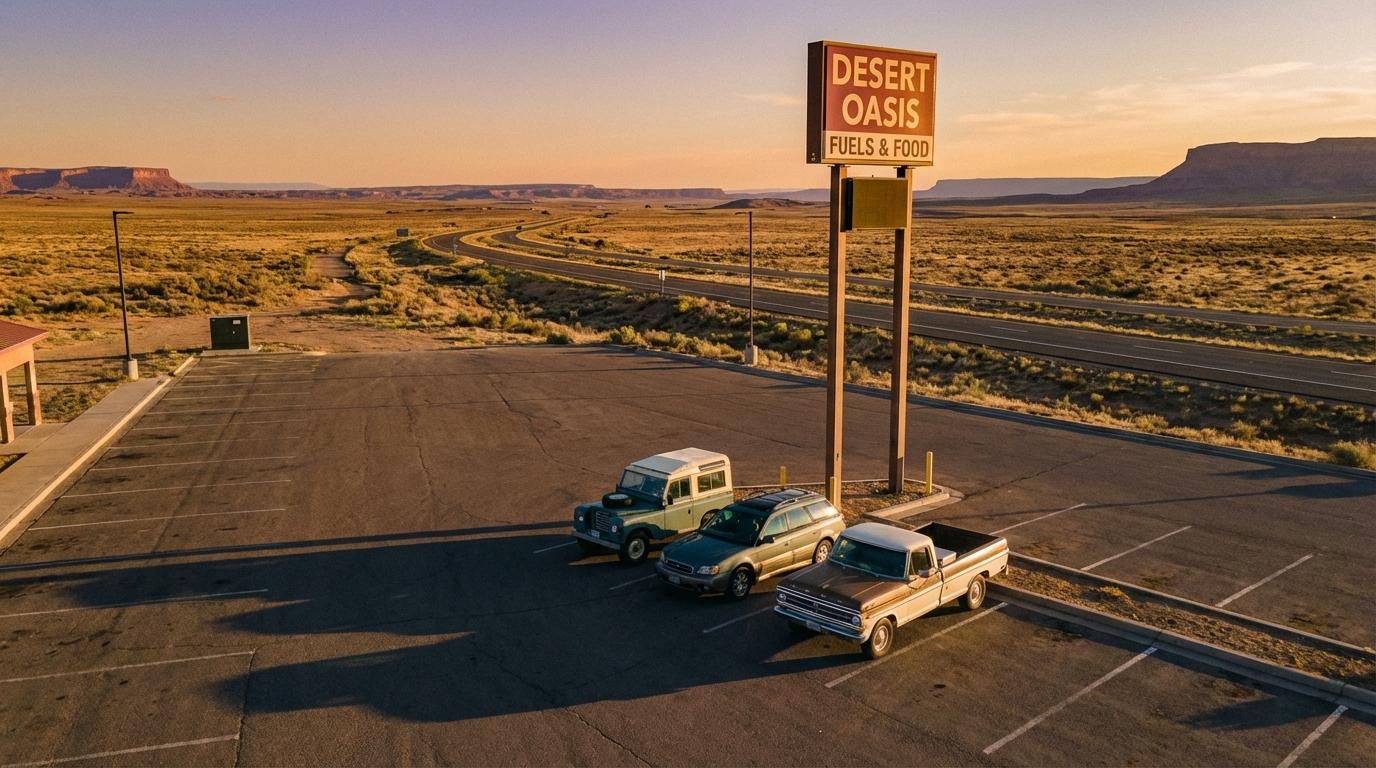
We never picked a meeting spot before a road trip until the afternoon our three cars lost each other in downtown Nashville. Before that, the plan was always the group chat. Somebody misses a turn, they text, the rest of us slow down. It usually works.
The idea had actually been sitting in my head for a few weeks by then. I had a hunting podcast on during a long drive home, and the guest was explaining how hunting parties deal with getting separated in the backcountry. Before anyone spreads out, they agree on an exact place everybody can reach on their own, like a creek junction or the base of a particular ridge. If the radios stop working or someone gets turned around, everyone heads there and waits.
I remember thinking we should do that on the highway. Then I forgot about it completely.
Part of it was that it felt a bit dramatic. Picking an emergency meeting point for a drive to a friend’s wedding sounds like something you’d tease a person about, and I was the person who usually did the teasing.
What Nashville Did to Us
We were driving from Louisville to Birmingham, which means I-65 straight through the middle of Nashville. Downtown, I-65 gets braided together with the interstates heading for Memphis and Chattanooga, and the lanes split with very little warning if you don’t know the city. I was in the right lane, saw my exit peeling off to the left, checked my mirror, and by the time I looked forward again I was committed to the ramp heading west.
Tom, in the lead car, got through clean. Jess ended up on the interstate toward Chattanooga. I was going toward Memphis and swearing at a concrete wall.
The group chat should have sorted it out in a minute. It didn’t, because Jess had driven straight into a patch of bad signal. My texts said sent and never said delivered. We tried calling and the calls kept dropping after a few seconds. I got off at the first exit I could, parked at a gas station, and sat there refreshing my messages while the annoyance slowly turned into worry. At some point I genuinely wondered whether Tom even knew I wasn’t behind him anymore.
It took about 45 minutes before all three cars were pointed at the same place again. Nobody was in danger. We just burned most of an hour that an agreed exit south of town would have turned into a short detour, and I was in a foul mood until Alabama.
What still bugs me is where it happened. Big interchanges near cities are exactly where I’ve watched groups split, and in my experience they’re also where the phone gets flaky. Full bars, nothing going through. I don’t know the radio engineering behind it. My fix is to stop counting on the chat anywhere near a big interchange, which is annoying, since that’s exactly where we’d want it.
Pick It by Exit Number
Name the rally point by its exit number, not by a place. “The Cracker Barrel near Bowling Green” is fine until the town turns out to have another, or until someone who has never been to Bowling Green types it into their phone while already rattled about losing the group. “Exit 22 off I-65” is printed on the signs well before the ramp, and any navigation app will route to it.
Add the state, though. I-65 has an Exit 22 in Kentucky and another in Tennessee, a couple of hours apart, and I only noticed that while writing our message for the next trip.
If you want a specific stop at the exit, use a gas station brand. Those logos sit on the highway signs too, so the driver gets the exit number first and the logo from the ramp after that. Local landmarks are worse. They rely on knowledge out-of-towners don’t have, and sometimes the place has closed since you last drove by.
Close to the Road, Easy to Get Into
The spot has to sit right by the route. Otherwise the cars that never got lost end up driving well out of their way to meet the one that did, which makes nobody happy. It also needs somewhere to park and wait without blocking anyone.
The worst rally point I ever picked was a restaurant on a frontage road. It was visible from the highway the whole way in. Getting to it was another matter, and the signs did nothing to help. We drove past the entrance twice before somebody spotted the turn. These days I skip any spot that needs more than a single turn after the ramp, and I really skip anything behind a set of lights or a roundabout, because whoever is heading there is probably flustered already.
Truck stops are my default.
The lots at a Pilot or a Love’s are big enough that cars pulling in can actually find each other, and the signs stand tall enough to spot from the interstate at night. A small roadside pull-off works for a couple of cars and turns into a mess with more. Rest areas are great when they exist, since they’re built for exactly this kind of stopping. On some stretches they’re just too far apart to count on.
Long Drives Need a Backup Spot
For a short drive, a single rally point is plenty. Past about four hours, I add a second one further down the route so that anyone separated late in the day doesn’t have to backtrack to the first. Roughly halfway, and then somewhere before the last long stretch, works for us. The destination covers the end.
The Message I Send Before We Leave
This doesn’t need a meeting. I post one message in the group chat the night before. For the Birmingham run it now reads:
“If we get split up and can’t reach each other, meet at Exit 22 on I-65, the Tennessee one, south of Nashville. First gas station off the ramp. Park and wait.”
I keep it that short on purpose. Nobody reads a long message in a group chat late at night, and the people who most need it are the ones who skim. I also say it out loud at the first gas stop, which feels slightly silly and gets a couple of eye rolls, and everyone remembers it anyway.
Park and wait is the part people skip. A rally point only works if whoever gets there first stays put long enough for the others to arrive, so we agree on 30 minutes up front. If nobody turns up by then, start calling, or carry on to the destination and sort it out there. Without a wait time, the first car tends to give up early and drive off to look for everyone else, and now you have a fresh problem.
Most of our trips run with a shared map now, which has mostly ended the “where are you” calls. I still set a rally point. When a car drives into a dead zone, its dot on the map fades and shows “no signal” while the car keeps going wherever it’s going. The phone holds on to its positions and sends them once signal comes back, which is useful afterward. By then you’ve already had to decide where to stop, and a dead phone battery takes the map out of it completely.
When You Split Up on Purpose
Planned splits use the same spot. Somebody needs gas, somebody else wants food, and instead of trying to merge back together at highway speed, everyone just meets at the next rally point. It also means whoever likes to drive fast can go ahead, and nobody in the slower car spends the next hour feeling like they’re holding him up.
On the last Birmingham run, Jess wanted barbecue in Franklin and Tom wanted to keep moving. Old us would have argued about it in the chat for half of Tennessee. Instead Tom kept going, Jess stopped, and we met at the Tennessee Exit 22 a while later, with Jess still pleased with herself about the brisket and Tom pretending he hadn’t been bored waiting.
Short splits in town get a different rule. When a light catches the back of the group, the front cars pull into the next gas station or lot on the right and wait, which I covered in the post about red lights splitting a convoy. That handles a gap of a block or so. The rally point is for the bigger splits, where the other cars are on a different highway and you can’t see them anymore.
Before Your Next Trip
Open the route the night before and find a truck stop right off an exit near the halfway mark. Write down the exit number with the state next to it, and add a second spot if the drive runs past about four hours. Post it in the group chat with the wait time, then forget about it until somebody misses a ramp.