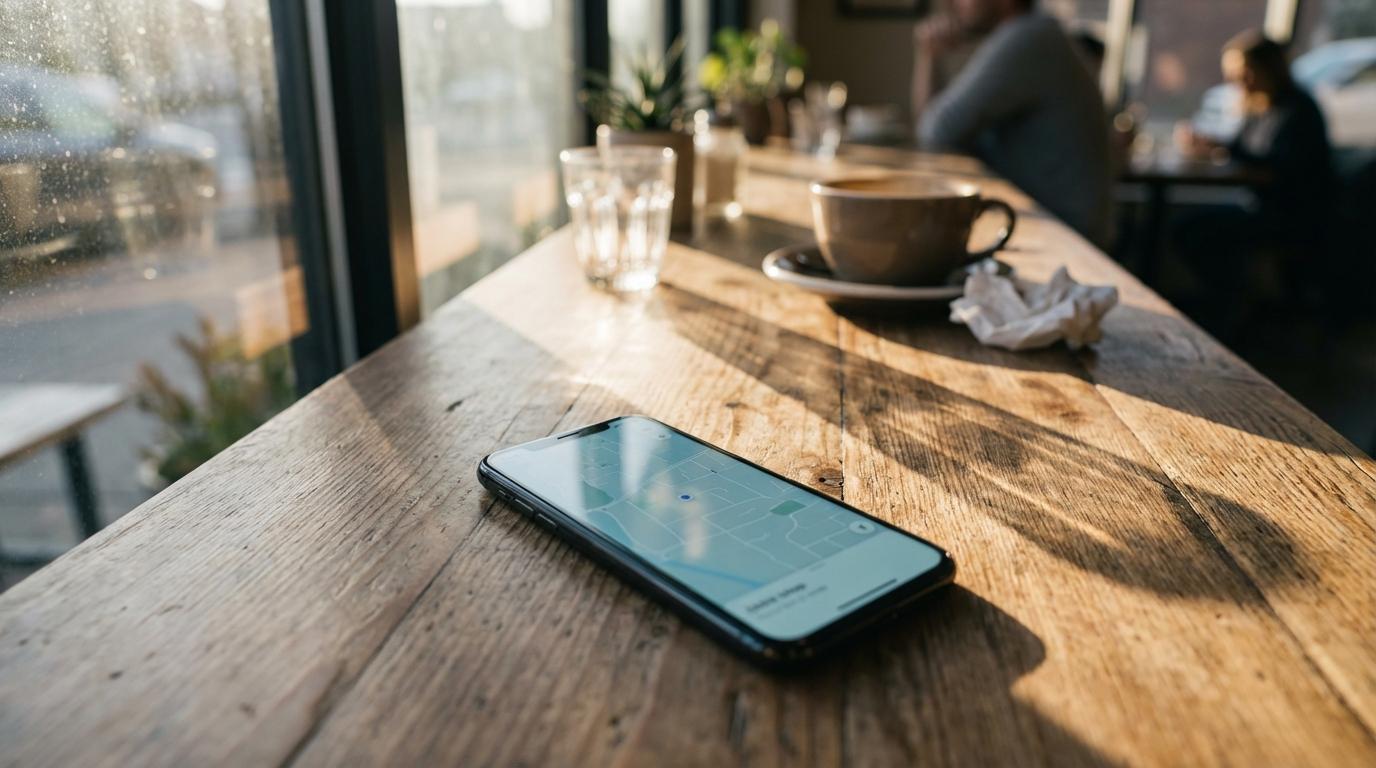
Have you ever opened a tracking app to check where a friend was, and then realized you could also see everywhere she’d been that day?
A few months ago a friend bailed on a dinner I’d organized. She said she had a migraine, which was fine (I get them too, I know what they’re like). Later that night I opened the group tracking app we’d used for a hike the weekend before, mostly to delete it, and her location history was still sitting there. It showed her at a restaurant across town, right when she’d said she was home in bed. I felt gross straight away, mostly because I’d looked at all. Neither of us had any idea the app was still holding on to her movements days after the hike ended.
I never brought it up with her. Instead I went through every app on my phone that knows where I am, and I’ve been a lot stricter about group tracking since.
What These Apps Actually Keep
Most people assume that sharing your live location means sharing a dot on a map, one point, right now. That’s what it feels like when you tap “share location” in most apps. Plenty of them keep a full history for as long as the session runs, and some keep it after. If the session has no clear end (a lot of apps default to “share until you turn it off”), your movement data piles up in the background: where you slept, how long you sat in the grocery store parking lot on the way home, all timestamped and, in some apps, accessible to anyone in the group.
Even bare coordinates and timestamps add up quickly. A place your phone sits every night from late evening until morning is your home address, and an address it visits every weekday during office hours is probably where you work.
For group trips this gets uncomfortable in a specific way. When you join a shared trip with friends and the app keeps history, you’re giving away more than your spot on the highway, because anyone in that group can scroll back and piece together where you stopped and for how long. My friends aren’t going to do anything bad with that (I genuinely believe it). I would still rather they couldn’t see it at all, and I suspect most of them feel the same about me.
How to Actually Audit What You’re Sharing
Most of this is fixable, but only if you go and look, and almost nobody does.
If you’re on an iPhone, go to Settings, then Privacy & Security, then Location Services. Scroll through the list. Every app with “Always” permission is tracking your location continuously, even when you’re not using it. If you haven’t checked this list in a while, you will be surprised. I found three apps with “Always” access that I hadn’t opened in months.
Android users have a similar path: Settings, then Location, then App Permissions. Apps are sorted into “Allowed all the time,” “Allowed only while in use,” and “Not allowed.” If an app is in that first group and it isn’t your navigation or real-time tracking tool that you actively want running, move it down.
Then check for stored history. Google Maps keeps a Timeline unless you’ve turned it off, and Apple Maps stores Significant Locations under Privacy settings. Third-party tracking apps usually bury their own history somewhere in account settings. If the app you used for last month’s group trip still shows your trail from that weekend, delete it, and if there’s no delete option anywhere, I’d uninstall the app.
For ongoing upkeep I use a simple set of if-thens. When I’m joining a shared tracking session for one event (a road trip or a concert meetup), then I set a reminder to turn sharing off the moment it ends. If the app has no automatic end time, then I check it manually the next morning. And if I find out an app kept my history for weeks after I thought I’d stopped sharing, then the history gets deleted and the app goes too.
What My Friends Can See in the App We Use Now
Our group drives with Konvoyage these days, and before I used it for anything I read its privacy page from top to bottom (yes, I’m that person).
During a trip, the people in it see my dot on the map with my name next to it. If someone taps my dot, they also see my speed and which way I’m heading, which is fair when we’re trying to stay together on a highway. My location is only collected while I’m in a trip. Leaving the trip stops it, and closing the app or switching off location permission does too. Trips can’t run forever either, because whoever creates one picks a length and the longest option is two weeks.
After the trip is where my dinner story comes in. Location points are stored, because that’s how the trip replay works, and they’re deleted about 30 days after they’re recorded. Basic trip details like the trip name, the code, the destination and the member list are kept for 24 months.
Links Reach People Outside the Trip
The links are the part I think people underestimate. Any member can share a live view link during a trip, and whoever opens it in a browser sees every member of the trip on the map (first names only, no speed), plus the destination and arrival times. A replay link lasts 30 days, and anyone who has it can watch without joining the trip. It shows everyone’s dot moving along their route with a first name on it, plus a timeline that includes the chat and quick messages sent during the drive. The first few hundred meters of each person’s route are left out, and so are the last few hundred unless they ended at the destination.
If I send a live view link to my mom during a group drive, my friends’ first names and dots go to her as well, so I tell them before I share it.
“Sharing With Friends” Should Mean Something Narrow
What I want from group tracking is pretty small. My friends should see where I am while we’re driving somewhere together, and I want to know when that stops and when anything stored gets deleted. An app that can’t tell me those dates doesn’t stay on my phone, and the one from the hike couldn’t.
I still use group tracking all the time. It’s genuinely useful for coordinating drives when half the group is slower than the other half and someone always needs fuel. Since the dinner thing (which I still feel weird about, for the record), I check permissions before every shared trip and look up how long the app keeps what it collects.
The next time you tap “share my location” with a group, do you know how long that app will remember where you went?