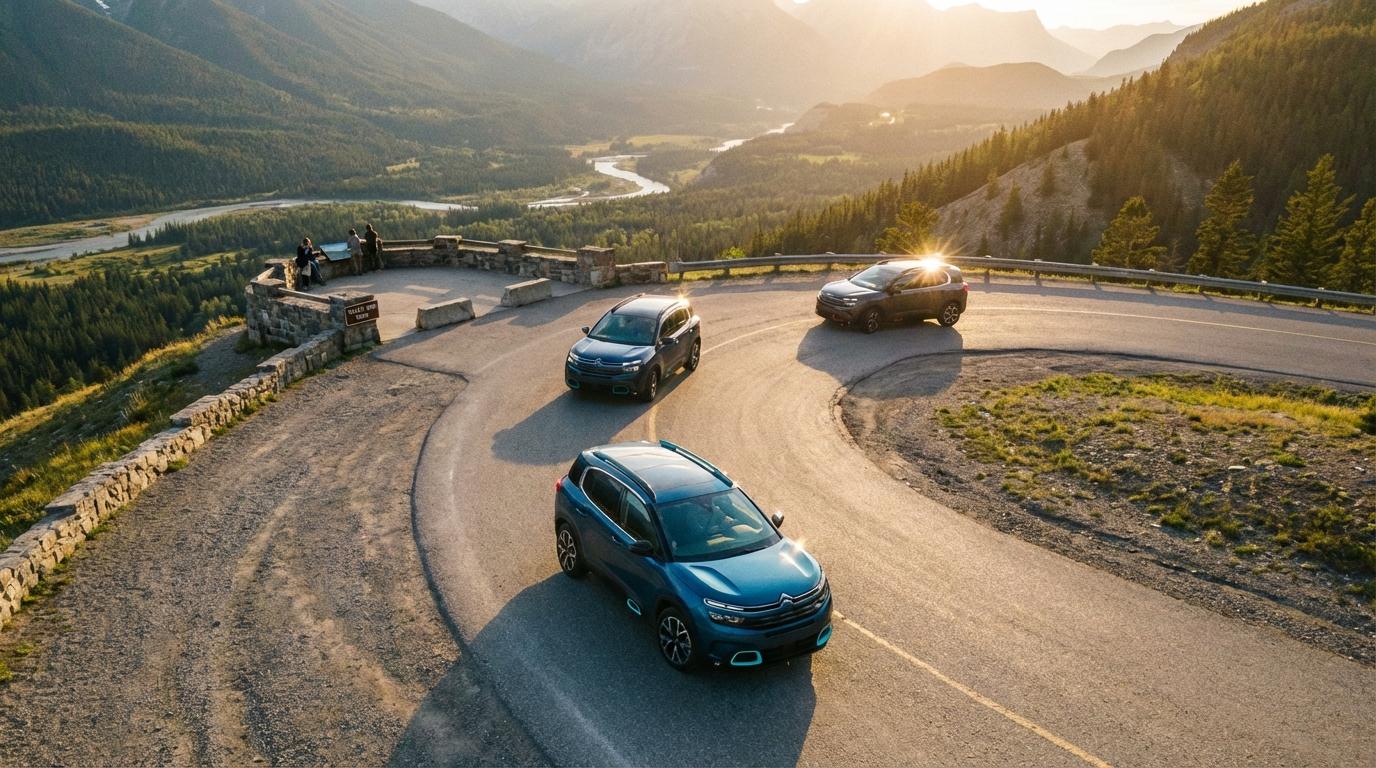
My dad has never passed a truck without a very good reason. He drives like he’s carrying a wedding cake on his lap, both hands on the wheel and cruise control set a hair under the limit. In front of him there’s always a big empty gap that he guards like it’s his property. Before every lane change he looks over his shoulder and then waits a little longer than anyone behind him would like.
For most of my life I treated this as something to fix. We’d caravan down to my aunt’s place in three separate cars, and Dad’s pace was the thing everyone groaned about. My brother and I would be up ahead with the radio loud, making good time, and then I’d check the mirror and see his silver Camry getting smaller behind the last overpass. By the toll plaza we weren’t a convoy anymore. Just three cars that happened to be headed the same way.
It took years, and one really bad afternoon, before I figured out he wasn’t the problem.
The Day I Made It Worse
Thanksgiving at a lake house, three cars, about four hours of highway. Mom rode with my brother and my wife was with me. The plan, as far as we had one, was to stay together and stop for gas somewhere around halfway. Dad was alone in the Camry with nobody to read directions for him, and he and his GPS had never really gotten along.
Partway there, the gap got embarrassing. I had my wife call him on speaker while I drove. She kept it friendly, but I was the one leaning toward the phone telling him to pick it up a little because everyone was waiting on him. He said okay. Just the one word, clipped short, and I decided that meant he was fine.
Twenty minutes later he missed the highway split.
He wasn’t daydreaming. Holding a speed that wasn’t his had taken all his attention, so he was watching the speedometer, and when the fork showed up he was in the wrong lane with no room to get over. He called from the shoulder of a road he didn’t recognize and asked which way to go. Mom was on that call too, from my brother’s car. She didn’t say much to me for a long while after.
I’d taken a careful driver and made him a nervous one, and a nervous driver is worse than a slow one. Trying to hurry the group cost us about forty minutes, plus an argument at the lake house that I’d rather not repeat here.
The Constraint You Can’t Negotiate With
Every convoy has a cruising speed, and the person least comfortable going fast picks it whether anyone agrees or not. In our family it’s Dad. With my friends it’s usually whoever is towing a trailer and feels every crosswind through the steering wheel. You can plan around that speed. Arguing with it has never once worked for me.
Most groups put the fastest driver in front and tell everyone else to keep up. I did it that way for years, and it’s backward. The fast driver sets a pace only he enjoys, and every car behind him spends the day chasing it.
Put the slow car near the front instead, right behind whoever is leading. The leader watches the mirror and matches him. Everyone further back settles into that pace without being told. It felt wrong the first time we tried it and normal by the second stop. With Konvoyage the whole group shows up live on one map, which helps a lot here, because the passenger in the lead car can see how far back Dad is without anybody phoning him.
What happens when you don’t
I’ve been through most versions of this. The fast cars pull ahead, and the slow driver gets anxious trying to keep up and misses an exit. Sometimes he just drops so far back that the lead car is out of sight and “follow the group” stops meaning anything. Up front, nobody notices, since they assume he’s right behind them. By the time somebody calls, he’s several exits past the turn and the group chat is filling up with pins and question marks.
My uncle once followed the wrong white minivan for most of an hour before anyone figured out where he was.
The Tail Car Nobody Wants to Be
The other change that fixed our family trips was a tail car. That driver stays behind everyone else. If he can see every car ahead, the group is together, and the moment he can’t, his passenger says so.
Nobody volunteers for it. It’s slow and it’s boring, and it matters more than anything else about the order you drive in, because without a tail you only find out the group split when somebody happens to glance at the mirror. Red lights cause this constantly in towns, and I wrote separately about what to do when a red light splits the convoy. Konvoyage covers some of it too. When someone drops well back while still driving, it sends a “falling behind” alert to the whole trip, so the tail car isn’t the only thing watching.
My brother ended up as our permanent tail. His truck has good sight lines, and Mom rides with him and does the talking on the phone, reading out lane changes and slowdowns like she’s spotting at a race. He was annoyed about it at first. A few trips later he was bragging that nobody had gotten lost on his watch.
Rest Stops Are Where It Falls Apart
You can get the order right and hold the pace perfectly, and then somebody sees a sign for a barbecue place.
Plan the stops before you leave. Actually plan them, not “we’ll figure it out.” Every couple of hours, pick a spot with gas and bathrooms in the same lot, and send the list to the group the night before. Once people know where the stops are, they quit taking their own exits. A surprise exit does more damage than any speed difference, since at least a slow driver is predictable.
Leave some slack in it too. If someone wants a few extra minutes, give them the minutes. Dad always took longer at stops than the rest of us, and for years it bugged me more than I let on. He’d walk a lap around the parking lot and check his tires with a gauge he keeps in the glovebox. Then I noticed he was the only one who got to the lake house in a good mood.
When splitting is the smart move
Sometimes the speed gap is too wide and staying together causes more friction than it’s worth. Splitting up for a while is fine if you do it on purpose.
Pick a regroup point before anyone leaves. Make sure the slower car has the address in the GPS, and agree that whoever gets there first waits. After that, let each group do its own thing. Half the family can sit down for lunch while the other half eats gas station sandwiches and keeps going.
Splitting without a plan is the version that goes wrong. “We’ll meet up somewhere after the mountain” is how we once ended up eating dinner at two different restaurants in the same town. Each car figured the other meant the diner by the gas station, and that town had a gas station at both ends. On a long drive, once people are restless and even the audiobook everyone agreed on has stopped helping, a loose split like that can turn into separate trips that only meet up again in the driveway.
Two Minutes in the Driveway
Our trips start with a short talk next to the cars now. We agree where the first stop is, and somebody says the speed out loud so Dad hears it. Nobody writes anything down. My wife usually asks whether anyone needs gas before the first stop, because somebody always does.
Dad stands there through all of it and never says I told you so.
I still drive faster than him when I’m by myself. When we’re together I keep the Camry in my mirror and let the cruise control sit where he’d put it. Last Thanksgiving all three cars pulled into the lake house within seconds of each other, and Dad was first out, stretching his back and asking who wanted coffee.