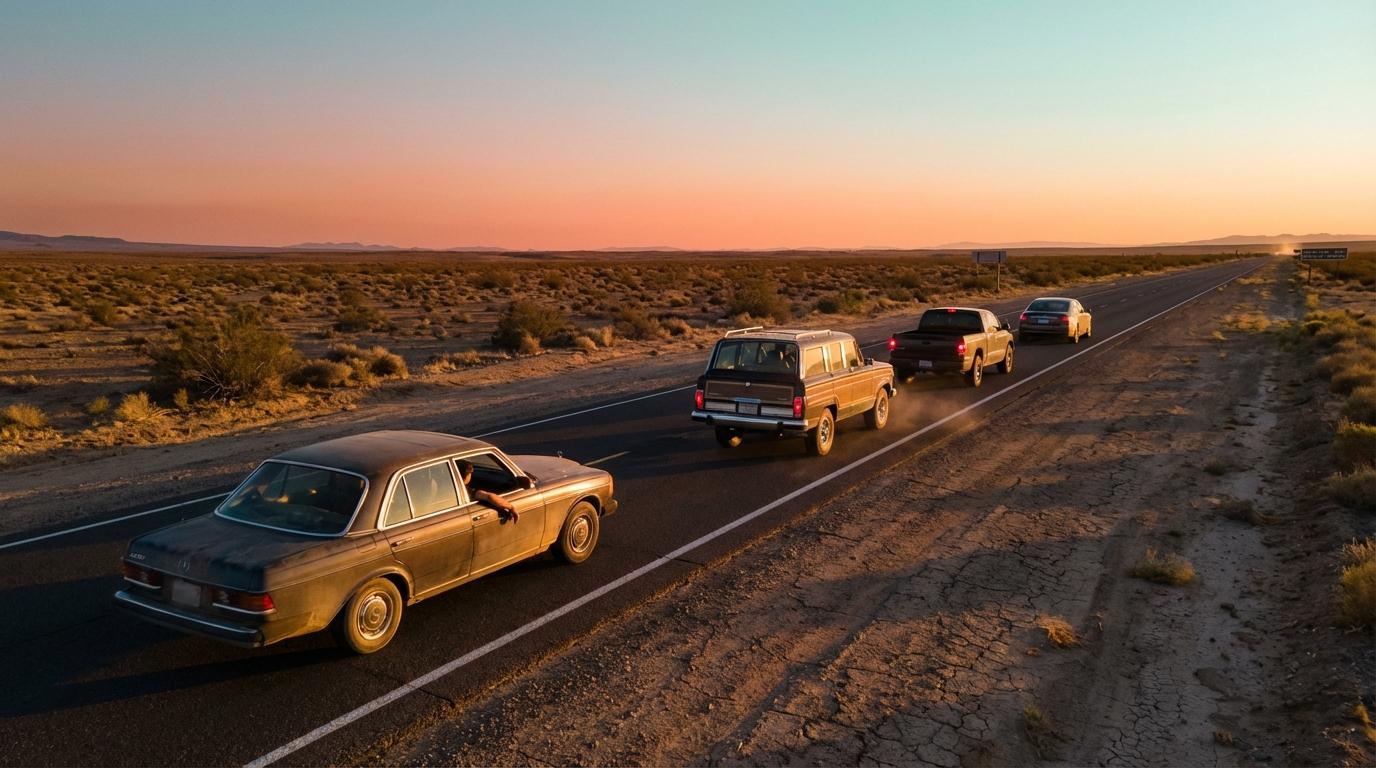
Before my first multi-car trip, I planned the gas stops down to the exit number and spent an embarrassing amount of time on snack assignments. Nobody asked what we would do if blue lights showed up behind one of us on the interstate. I didn’t ask either.
One of our cars got pulled over near the Georgia-South Carolina border. Broken taillight, nothing dramatic. Within minutes the rest of us had scattered, because nobody knew whether to stop or keep going. Jess pulled into a gas station. My cousin drove on for miles, sure the stopped car was right behind him. I pulled onto the shoulder (I know, I know) and sat there squinting into my side mirror at flashing lights I could barely make out. By the time we found each other again, a broken taillight had eaten nearly an hour, and nobody in my car said much for the next stretch of highway.
I’ve had a plan for traffic stops on every trip since.
The Instinct That Makes Everything Worse
When a car in your group gets stopped, the first impulse is to pull over too. It comes from a good place, and it is almost always the wrong move.
Picture the officer’s side of it. They stopped one car, and now more cars are braking and drifting onto the shoulder with their hazards on. An officer can’t tell what a group like that is about to do, and a stop where the officer is unsure of what’s going on gets slower and tenser for everyone, including your friend sitting there with their license in their hand.
The other cars keep driving.
I know that feels like leaving your friend on the side of the road (it felt exactly like that to me). But a routine traffic stop is not an emergency, and the most useful thing you can do for the person in it is be somewhere else, out of the way, waiting for their message.
The one exception worth mentioning
Maybe someone in your group has told you before the trip that a stop would be hard for them alone, because their English is shaky or because dealing with police makes them badly anxious. In that case one car can wait for them at the next exit, off the highway in a parking lot, never on the shoulder behind the police car. Settle that before you leave, while everyone is calm and standing next to the cars.
The Buddy System (It Sounds Silly Until You Need It)
Before every trip now, I pair the cars up. If you get pulled over, your buddy car is the one that checks on you afterward, and if you break down, your buddy is the one who comes back for you while everyone else keeps going.
This fixes what went wrong on the Carolina trip, which was everybody trying to help at once. When everyone is texting the stopped driver and calling each other and deciding on their own where to wait, nobody is actually helping. Put one person in charge of it and the rest of the group gets a slightly longer coffee break and that’s about it.
Setting it up takes as long as finding your sunglasses. I stand in the parking lot and point at cars. “You’re buddies. And you’re buddies.” People laugh at me every time (fair enough).
Where Everyone Else Goes
Keeping going doesn’t mean driving aimlessly until somebody’s phone buzzes. If you planned your rest stops ahead of time, the next one is the meeting point, and it’s probably already in everyone’s navigation. The traffic stop changes nothing about the route for the other cars.
Without planned stops, the passenger in the lead car picks the next exit with a gas station or rest area and sends one message to the group chat, something like “Pilot at the next exit, pull in there.” A lead driver with no passenger just signals, takes the exit, and lets everyone follow. The text can wait until they’re parked.
I’ve also watched people slow to a crawl hoping the stopped car would catch up, and once, memorably, try a U-turn through the median of a divided highway. Both of those are more dangerous than the traffic stop ever was.
The shoulder is not a waiting room
I did it myself, so I’m not judging anyone, but a working car parked on the shoulder is a hazard for every tired trucker drifting right. Get off the highway and wait somewhere with a bathroom and some terrible gas station coffee.
What the Stopped Driver Should Actually Do
Handle the stop first. Everything else waits.
Keep your hands where the officer can see them and leave the phone alone while they walk up. Don’t text the group “OMG getting pulled over,” and don’t call your buddy on speaker so they can listen in. Do what the officer asks, hand over your license, registration and insurance, and stay polite even if you think the stop is nonsense (you can contest a ticket later, through the proper channels, not on the shoulder). Then, once the officer has driven off and you’re still parked, send one message: “All clear, heading to you.” That tells the group you’re fine and moving. Save the full story for the parking lot, where you can use hand gestures to properly convey the indignity of a warning for going barely over the limit.
Everyone else has a job during the stop too, and it’s mostly doing nothing. Nobody calls the stopped driver while the officer is there. And if you happen to drive past, don’t film it. A phone buzzing in the cupholder or a camera pointed out a window only makes a calm stop less calm, and your friend has enough going on.
A stop can drag on, though, if there’s a registration problem or the officer comes back with more questions. Then the stopped driver calls their buddy once the officer says it’s fine to use the phone or has finished. Only the buddy. The buddy (ideally a passenger, so whoever answers isn’t also driving) passes the update to everyone else, which is exactly why you assigned buddies in the first place.
Somebody Has to Make the Call
Someone in the group needs to make decisions when things go sideways. It doesn’t have to be the best driver or the most experienced road-tripper, just the person who doesn’t panic and can decide something in thirty seconds. (If you’re reading an article about traffic stops on group trips, that’s probably you.)
The coordinator decides how long the group waits at the meeting point and when to move on if the delay stretches. Updates from the buddy go to them. Ideally they ride as a passenger too, so none of this competes with the road. Name a backup coordinator as well, because sooner or later the coordinator will be the one who gets pulled over. Mine did, on a later trip, and I have never been so glad I’d made Jess the backup.
When the Wait Gets Long
Most stops are over quickly, and your friend pulls in while you’re still in the bathroom line. Sometimes it takes longer.
Say everyone has bought drinks and had a small argument about the music, and your friend still hasn’t shown up. Something is going on. Maybe there’s an insurance problem, or the officer has asked the driver to step out of the car. None of that means anybody did anything wrong, but the group needs a different plan than “wait a bit more.”
If the stopped driver has already sent “All clear,” you just keep waiting. Without that message, the coordinator gives it a while and then texts the driver to check in, which they can read once the officer has left. When the driver replies, the group adjusts to whatever they say. No reply means waiting a little longer, and if the silence keeps going, the buddy car heads back to check while everyone else carries on toward the destination. Regrouping quickly matters even more if the stopped car is carrying something the group needs, like medication or shared gear in the trunk. (I now keep my own meds in my own car, a lesson from a different trip entirely.)
What I wouldn’t do is keep the whole group idling in a parking lot for hours. It doesn’t help the stopped driver, and by the end of it everyone is snapping at each other over who finished the pretzels.
The pile-up after the stop
Most of what goes wrong happens after the blue lights. One car gets pulled over, the next driver misses their exit because they were staring into the mirror, and suddenly the group has a pile of problems instead of one. I’ve seen nearly that sequence with completely different groups of friends, people who would never otherwise drive like that.
When something happens to one car, every other car carries on to the next stop at its normal speed and in its normal lane. Only the car that had to leave the plan leaves it. I use the same rule for flat tires and missed exits, and it has held up every time so far.
Five Minutes in a Parking Lot
All of this takes about five minutes to say out loud before you leave. Gather everyone by the cars and tell them that if anyone gets stopped or has car trouble, the rest carry on to the next planned stop, the buddy checks in, and the stopped driver sends a message once they’re parked and finished. Some people will think you’re overthinking it. (My cousin certainly did, right up until the taillight.)
These days we also keep a live map with everyone’s ETA running during the drive, which takes care of the “where is everyone” part. When a car gets stopped, its dot just sits there, and after about 90 seconds Konvoyage sends the whole trip a “has stopped” alert for that person. Once they’re driving again, everyone gets an “is moving again” alert, so the stopped driver doesn’t even need to text from the side of the road. (Checking any of that is a passenger’s job.) The buddy still calls when it’s needed and the coordinator still decides, but nobody spends the wait guessing which exit everyone took.
Who in your group would you trust to make the call if it were your taillight?