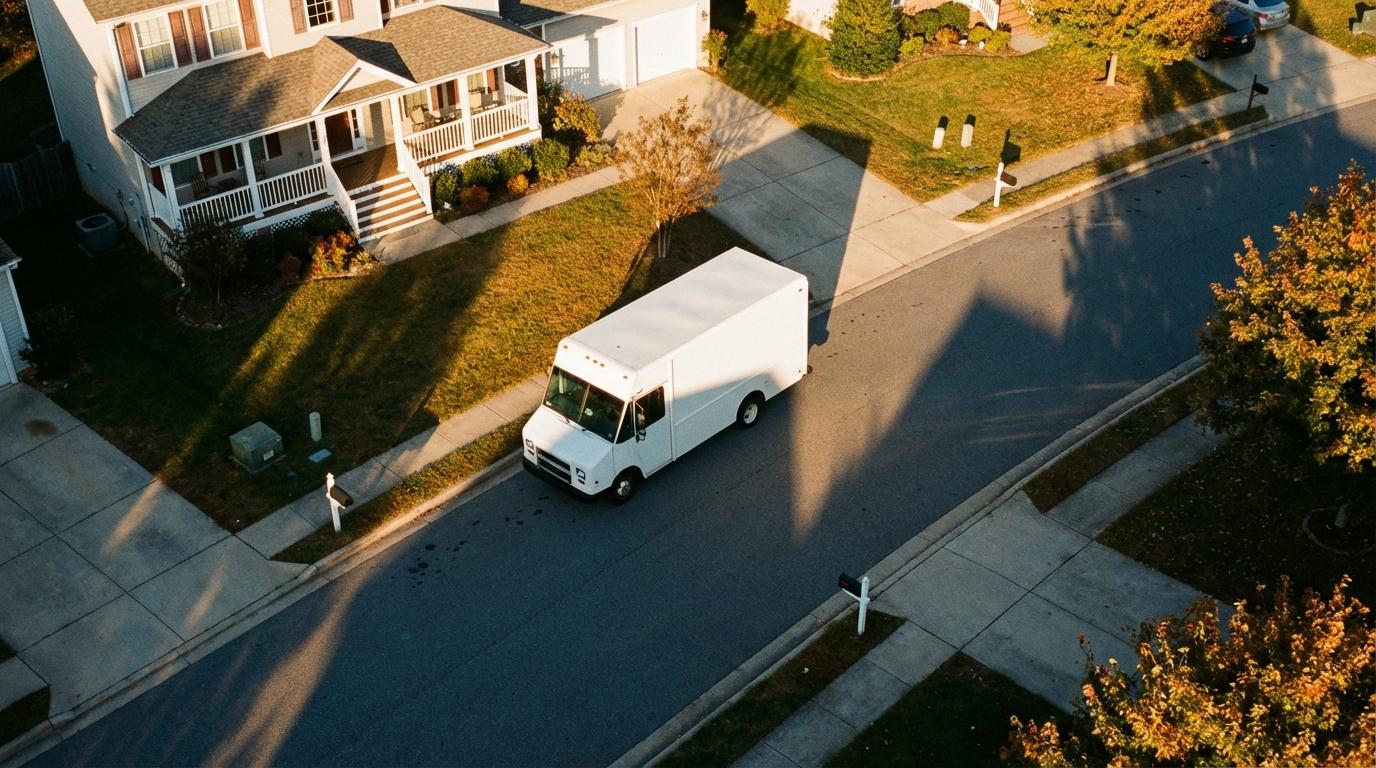
I once docked a driver’s on-time bonus for a delivery he made exactly when he was supposed to.
The customer had called in sounding very sure of herself. Our driver, she said, rang her doorbell before eight in the morning, when the window we’d given her didn’t open until ten. She had details. According to her, she’d been getting the kids ready for school when he showed up, and she was annoyed enough that the whole thing sounded real. My driver told me he got there a little after ten and nobody answered. I went with the customer because her version had more detail in it, and detail felt like proof. A few days later a different customer on the same route mentioned that our guy had turned up at her place right on time that morning, and the distance between the two houses made the first complaint impossible. I gave the bonus back and apologized to him in person. He was decent about it, which somehow made it worse.
That one still bugs me, mostly because I had no way to check either story at the time.
Back when I drove a route myself, I was on the other side of those calls. A dispatcher would ring me in the van and ask if I was sure I’d been at the right house, and I’d sit there with a clipboard on my knee and the heater blowing on my feet, with no way to show him anything except my own word. I hated that feeling more than the cold mornings. Then I became the dispatcher, and within about a month I was asking drivers the exact same question in the exact same tired voice.
A no-show that wasn’t
The case I want to walk through came after we started running our drivers’ afternoon routes as Konvoyage trips. Each driver starts a trip on his phone when he leaves the depot, with his last drop set as the destination. The app keeps sending his location while the phone sits in the dash mount with the screen off. Nobody in the office watches it live, and most days nobody looks at any of it.
On a Thursday afternoon a customer called to say the driver never came. She said nobody knocked and there was no card in the door. About an hour later Dale, the driver, called me after his last drop, because she had already rung him too. He said he stood at that door for a good while and knocked more than once before giving up. Both of them sounded completely certain, and both had the clipped tone of someone who’d already told the story once that day.
Under my old routine, I’d confirm the stop was on his sheet, call him back and ask if he was sure about the house number, get a flat “yes,” and then call the customer and ask, as gently as I could manage, whether she might have stepped out for a minute. Nobody likes being asked that. Most of the time I ended up booking a re-delivery just to make it go away, and the whole thing ate about forty minutes of an afternoon that had better uses. Sometimes I threw in a discount on top. That satisfied nobody either, because the customer still thought we’d skipped her and the driver knew I hadn’t backed him.
Opening the replay
When a trip ends, everyone in it gets a replay link, and it opens in a normal browser. His afternoon trip had ended at that last drop, so he forwarded me his link while we were still on the phone. I opened it on my laptop with the customer’s address up in another tab.
The replay is a map with a dot for each person in the trip, a play button, a bar you can drag along and a clock that shows the actual time of day as the dot moves. It doesn’t draw route lines on the map. You watch the dot travel, and you can speed playback up, which with a delivery driver you will want for most of the afternoon. I dragged the bar to roughly where I thought her stop would be and pressed play.
Dale’s dot came off the main road, turned onto her street and stopped in front of her house. Then the playback jumped forward past the still part and put up a small label saying “Stopped” with the minutes next to it. The clock read 2:41 when the dot stopped and 2:53 when it started moving again.
Twelve minutes outside the right house.
I also opened the Timeline panel on the side, which lists what happened during the trip with a clock time next to each line, such as when the trip was created and when someone arrived. For a solo delivery run there isn’t much in it. It did show the trip had been created at the depot right after lunch. I also never saw a “No signal” label while I skipped through his afternoon, so his phone hadn’t been switched on halfway through, and I was glad to rule that out before anyone asked.
I took a screenshot of the map with the dot sitting outside her house and the clock visible, and emailed it to the customer with two lines of explanation. She wrote back later that afternoon to say her husband had been home the whole time, upstairs with headphones on. We skipped the re-delivery, and Dale got a text from me saying he was right.
What the dot can’t tell you
Replay showed me where Dale’s phone was and when. It didn’t show me that he knocked. For all the map knows, he sat in the van eating a sandwich for twelve minutes and then drove off. I believed the knocking because I know Dale, and because of what the customer found out at home, but nothing on the screen proved it.
That difference matters when you send something to a customer. In my email I wrote that our driver was outside her address during that window, because the replay shows exactly that, and I left out anything about the door. If she’d pushed back on the knocking, I would have been back to his word against hers, and I didn’t want to claim more than I could show. Customers forward these emails, sometimes to their own boss, and a claim you can’t back up is the first line someone picks apart.
About the break room
Konvoyage tracks the person’s phone, so it says nothing about the van or the package. A driver who leaves his phone in the break room will appear to spend the afternoon in the break room. That has never come up for us, but a sharp customer would think of it quickly, and you should have your answer ready before they ask: our drivers navigate with the phone in the dash mount, so the phone goes where the van goes.
Telling the drivers first
We told the crew before the first trip went out, and I pitched it as backup for the next customer who claims they never showed. Most of them took it that way, although a couple of them waited a few weeks before they believed I meant it. One of the older drivers asked whether I’d be checking how long his lunch breaks were. I told him I don’t open a replay unless someone complains, and in practice I’ve stuck to that, mostly because I don’t have time to watch dots for fun.
What helped most with trust is that the driver gets the same replay link I do. Dale had his before I did. A driver who hears about a complaint can open the same map I’m looking at and check it himself, and a couple of them now send me the link before I’ve even finished reading the complaint.
Phones were the other reason it went over easily. Our drivers already had them on the dash for directions, so nothing new got bolted into the vans and nobody had a box under the seat they couldn’t see. If you’re weighing that choice, there’s a longer case for smartphone-based tracking over hardware worth reading.
Set it up before the next complaint
Have drivers start a trip at the beginning of every run, including the boring routes. A replay only exists for trips that were running, and in my experience the angry calls come from the quiet suburbs as often as from the difficult addresses.
Open the link soon after a complaint comes in. Replay links work for 30 days, and a customer who disputes a bill after the link has run out leaves you with nothing to look at. When a replay settles a dispute, save the screenshot in that customer’s file with the clock showing in it.
Keep your reply to what the map shows. “Your driver was outside your address from 2:41 to 2:53” holds up. Anything about what happened at the door puts you back where you started.
Some companies go further and let the customer watch the driver arrive live, which heads off a lot of these calls before they happen. There’s a fair argument about letting customers follow the crew live if you run that kind of outfit. For us the replays afterward have been enough, and they’re most of why we use Konvoyage for field team management at all.
Call the driver before you email the customer, every time. When I rang Dale back to tell him the replay matched his story, he mentioned that the house has a side door everyone uses and a front door nobody answers, and that he’d tried both. I put that in my notes for the next driver on that route.