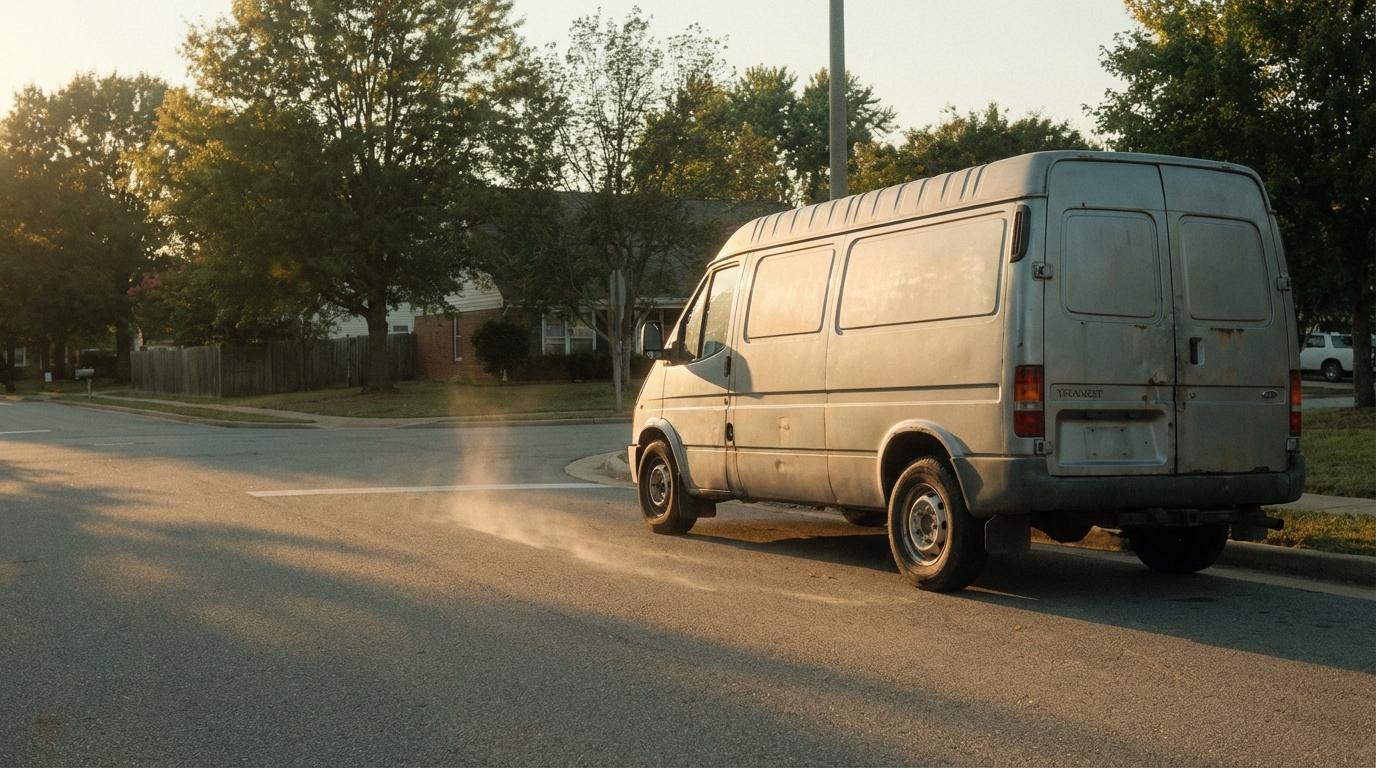
A driver who keeps showing up late gets treated as a performance problem almost by default. In most of the cases I have dealt with, the schedule was the thing that was wrong.
My younger brother drives delivery shifts, and he has been five minutes late to family events for as long as I can remember. We joke about it at dinner. What bugged me, in a quiet way, was how steady it was. Random lateness looks like twenty minutes one day and on time the next. His is so regular you could set a clock by it, which made me suspect something outside him was setting the pace.
When I finally asked about his shifts, the answer had nothing to do with effort. There is a left turn near his zone that eats about eight minutes every afternoon since the city changed the signal timing, and his dispatch window was set before that change. He was absorbing the difference on every run and getting written up for it.
Look at where the lateness happens before you look at the person
Before deciding anything, figure out the shape of the problem.
If a driver is late on all kinds of routes at all kinds of times, you probably have a habits issue. When the late arrivals keep landing on the same corridor in the same window, the road is telling you something. Those two situations need completely different fixes. Fire someone in the second situation and you lose the person who was, without meaning to, showing you exactly where your plan breaks.
Pull the stop-level arrival times. Check how many of the late ones sit on a single stretch of road, and whether they bunch up in the afternoon when school pickup traffic starts. If your system records how long a driver spends at each stop, read that too. I lost a lot of minutes as a driver wandering apartment complexes looking for unit numbers that were painted over or missing, and none of that was fixable by trying harder.
A fleet manager I know from a logistics meetup told me about the time he walked into a termination meeting with the paperwork already printed. On a hunch he pulled up the driver’s recent routes on a map first. Every late arrival was on the far side of a river crossing, and his dispatch tool had been sending traffic over a bridge that was closed for repairs most of that month. He tore up the paperwork on the walk back to his desk. The driver still works for him. Hiring and training a replacement would have cost him far more than the ten minutes it took to look at a map.
Some routes are just harder
Most dispatch setups score every route as if it were equally hard. Anyone who has driven a few of them knows that is false. One loop has tight delivery windows downtown and a loading dock you have to back into at an angle nobody designed for today’s box trucks. Another loop is quiet suburbs where you can find every house half asleep.
If you never rate route difficulty, you are grading drivers against a curve they cannot see. Your most-late driver could be the one who keeps getting handed the downtown run and handles it better than anyone else would. Meanwhile the driver with a perfect on-time record on the easy loop might fall apart the first week you move them. An on-time percentage on its own will not show you either of those things.
You can build a rough difficulty rating from data you likely have already. Compare historical drive time against the promised window, and add how often drivers circle for parking or a free loading bay. Customer density per square mile helps as well. It will be crude, but even a crude ranking tells you which routes are hard and who keeps getting stuck with them.
Coach the driver or rebuild the route?
With arrival data and a difficulty rating side by side, the decision gets easier. The question becomes whether coaching would change anything for this person.
Sometimes it would. If the driver is late on routes that other people run fine, and the late stops are scattered all over the map with dwell times that swing wildly, that points to how they work. Have a direct conversation about expectations. Then do a ride-along, because an hour in the passenger seat will show you the habit that is costing them minutes faster than any report. Occasionally the conversation ends up being about fit, and that is a fair outcome too.
The other case is when everyone struggles on the same route, or the late stops line up with a closure or a dispatch mistake nobody caught. Retraining that driver fixes nothing, because the route is what needs to change. I have watched managers spend weeks building a performance improvement plan for someone who needed a short routing meeting, and it drives me up the wall every time. I look at numbers all day and I still forget that sometimes the whole cause is one stubborn intersection.
Before any personnel decision, check whether more than one driver has run that route under normal conditions. If nobody else has, you do not have enough to act on yet.
The customers on that route notice first
Late deliveries cost you customers quietly. Someone who stops ordering because your driver keeps missing the window rarely calls to explain. They just leave, and the loss gets blamed on prices or a competitor when the cause was a route nobody checked. Fixing a route usually pays back faster than fixing a driver, because a bad route drags down every driver you put on it and every customer at the end of it gets the same late package.
Drivers are also usually the first people to say a route is broken, and they usually get ignored. I wrote more about that in this piece on driver route feedback, if you want the listening side of it.
So if you have a driver’s numbers open right now and a termination template in the next tab, close the template and open the map. Look at where they were late and at what time of day. Then compare against every other driver who ran the same route in the same window.
What happened with my brother
His on-time rate at work went up the week his dispatcher quietly moved him off that left turn and onto a side street a few blocks over. Nobody told him they had done it, and nobody mentioned the weeks he had spent getting flagged for a timing change the city made. He just started reaching his next stop on time. The supervisor who had been putting together a file on him dropped it and moved on to someone else’s numbers. My brother still shows up five minutes late to Sunday dinner, though, and I have stopped trying to find a route problem behind that one.