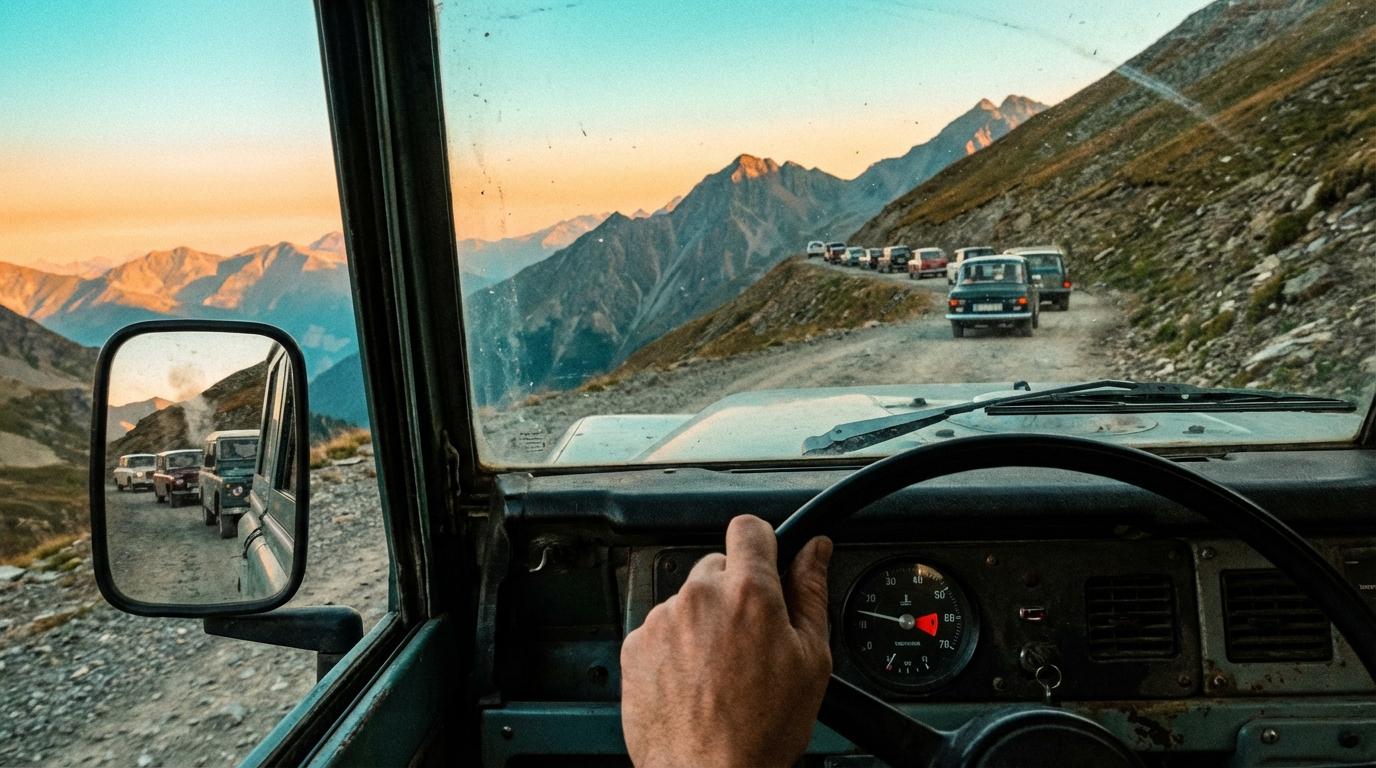
I have this habit that my friends find slightly ridiculous. Before any mountain drive, I pop the hood and check the coolant reservoir. It takes maybe two minutes, and people give me the look, like I am about to pull out a clipboard and do a full FAA pre-flight. A cooling system that handles flat highway driving without trouble can still fall apart on a long climb. I have watched it happen to vehicles in my own convoy, and once, embarrassingly, to my own car.
That was a few years ago on a long grade in Colorado. The temperature gauge had been creeping up for a while, slow and steady, and I told myself I was almost at the top. Just another mile or two. The cabin was getting warmer even with the AC on, which should have told me something. I kept going anyway, because pulling over felt like an overreaction. By the time I finally stopped, the engine was knocking and I could smell coolant burning off somewhere I could not see. The repair bill was north of a thousand dollars, and the mechanic just shook his head at me. I check my coolant every time, and I still sat there watching that needle climb for miles without doing anything about it.
With a convoy, overheating is the breakdown I plan for first on any pass, because it is the most predictable one and most of it can be headed off by someone who knows what to look for.
What Your Engine Is Fighting on a Climb
On a steep grade the engine works against gravity for miles at a time, so it makes far more heat than it does at a steady highway cruise. You are also going slower, which means less air pushed through the radiator, and the radiator depends on that airflow. The fan can make up some of the difference. On a long enough climb it cannot make up all of it.
Altitude makes it worse. Thin air carries heat away from the radiator less well, and an engine without a turbo loses power as you go up, so you end up holding the throttle down harder just to keep your speed. A car that never runs warm at home can start creeping up above seven thousand feet on a sustained grade.
Older cars run out of margin first
Not every vehicle in your convoy carries the same risk. Radiators degrade quietly, with corrosion and mineral deposits narrowing the small passages inside, and nothing on the dash tells you it is happening. A thermostat that sticks partly closed causes the same kind of trouble from a different direction. Hoses develop soft spots that bulge under pressure, and an old fan clutch on a truck may stop locking up fully. On flat roads you would never notice any of it. Put a couple of those together on a twelve-mile climb and the cooling system is being asked for its full capacity at the exact moment it no longer has it.
My Colorado car probably had one of those problems for months. I had just never pushed it hard enough to find out.
Watch the Needle, Not Your Nose
Most drivers only look at the temperature gauge when they smell something. On a climb you want to glance at it regularly, the way you check your mirrors. In normal driving the needle sits near the middle, and on a grade it is normal for it to drift a little above its usual spot while the engine works harder. That drift alone is no reason to stop.
The concern starts when it pushes past the three-quarter mark.
Turn off the AC first. The compressor puts extra load on the engine, and the condenser sits in front of the radiator, warming the air before it gets there. Expect the cabin to get hot.
Next, set the heater to full heat with the fan on high and the windows down. It is miserable. The heater core works like a small second radiator, though, and running it hard pulls heat out of the coolant and into the cabin. I once drove the last stretch of a grade like that in July with everyone in the car complaining the whole way, and the needle came back down before the top.
A lower gear can help as well. In an automatic, use the low-gear or manual setting so the transmission is not hunting between gears and slipping, which adds heat of its own. Higher revs turn the water pump faster and move more coolant, and on trucks with an engine-driven fan the fan speeds up too. Easing off your speed a little helps more than most people expect.
If the needle reaches the red or the warning light comes on, pull over at the first safe place. Do not do what I did in Colorado. Running an engine that hot can warp the cylinder head or blow the head gasket, and those repairs make my bill look cheap.
Once you are on the shoulder
Do not open the radiator cap.
The system is under pressure and the coolant is close to boiling, so opening the cap can spray scalding liquid at you. Pop the hood to let heat out and stay back from the engine bay. Wait until the engine has properly cooled before you touch anything, and even then, check the level at the plastic reservoir.
Running the Climb as a Group
The car most likely to overheat goes near the back, just ahead of whoever is sweeping. If it has to stop, nobody ahead of it is blocked, and the sweep is right there with it. The whole convoy climbs at the speed that car can manage. I have seen a group lose two hours because the lead driver set a pace the oldest car could not hold, and nobody slowed down until it was steaming on the shoulder. A struggling car in the middle of the line also opens gaps, and a gap on a mountain road plays out a lot like a convoy getting split at a red light, with the front group driving on while the back loses track of them.
If someone’s gauge starts creeping, the group should hear about it early, before anyone is hoping it settles. That gives everyone time to pick the next pullout and stop together somewhere sensible instead of scrambling for a narrow shoulder. The driver keeps both hands on the wheel for this. A passenger can send it, or it waits until the car is stopped. In Konvoyage a passenger can tap the “Wait for me” quick message, and if one car sits stopped for about a minute and a half while the others keep moving, the rest of the trip gets an alert that it has stopped without anyone touching a phone. Passes are also where signal drops, though. When a phone loses signal its dot fades and shows “no signal”, so it is worth knowing what a convoy alert looks like on the road and agreeing on a meeting point at the top before you start up.
Before the climb, look at the route and find the pullouts. Knowing there is always a safe place to stop a few miles ahead takes most of the panic out of a rising gauge.
The Two-Minute Check at the Bottom
Back to my habit. When the convoy stops at the base of a mountain, I walk the line, and every vehicle gets a coolant reservoir check with the engine cold. The reservoir has minimum and maximum marks, and you want the level between them. If it is low, top it off before climbing. Use the coolant type the owner’s manual calls for, since some types do not mix well and can form sludge in the system. In a pinch plain water will get you up the hill, but it boils sooner and gives no corrosion protection, so have the system refilled properly afterward.
While you are under the hood, squeeze the upper radiator hose. It should feel firm with a little give. If it feels spongy or collapses easily, it is old and more likely to burst once the system is hot and under pressure.
Plan a stop at the summit or the first flat stretch after it. A few minutes at idle lets temperatures settle, and you get a chance to look at the gauges again before heading down. On the descent, use a lower gear and let the engine hold your speed so you are not riding the brakes all the way to the bottom.
What I keep in the trunk
A gallon of premixed coolant that matches the car, plus a gallon of plain water as backup. Heavy work gloves for anything hot, and a flashlight, because a lot of these stops seem to happen at dusk. It all fits in a corner of the trunk, next to whatever snacks survived the drive so far.
If any car’s gauge moved during the climb, deal with it that evening, before the next mountain section. Top off the coolant and look over the hoses and belts in daylight if you can. If there is a shop along the route, ask for a cooling system pressure test, which is usually quick and cheap and will find a slow leak you cannot see from the outside. And if you are the one watching your own needle climb on the way up, pull over at the next safe spot instead of telling yourself you are almost at the top.