I used to run my convoys through a WhatsApp group, and I thought I was the careful one. (No phone calls while driving, only short texts, which in my head counted as responsible.) “Taking this exit.” “Construction ahead, slow down.” I typed every one of those at highway speed with my thumb, which is exactly what I would have lectured anyone else for doing.
What ended it was a Tuesday afternoon on I-81 outside Harrisburg. My friend Derek was three cars behind me when I sent “Taking next exit, follow me” to the group. He looked down to read it, drifted on the ramp and scraped the guardrail at low speed. Nobody was hurt. His truck came out of it with a dented bumper and a cracked taillight, and the message on his screen when it happened was mine.
He brought it up later over pizza, not angry, just stating it: “I was reading your message when it happened.”
I took the group chat out of convoy driving that same day and haven’t put it back.
Why the chat kept pulling my eyes down
Group chats assume you have free hands and nothing better to look at. Driving gives you neither (and a phone mount doesn’t fix that, it just moves the screen up a few inches).
The part I underestimated was how unpredictable a group thread is. With a text from one person, it arrives, you deal with it, and it’s done. A convoy chat with everyone in it fires whenever anyone has a thought: where to stop for gas, or a blurry photo of a cow. I’d feel the buzz, and even when I didn’t look, part of my head stayed on the phone wondering if I’d missed something that mattered. After Derek, I started paying attention to how often I glanced down on an ordinary drive. My guess would have been a handful of times an hour. It was closer to every few minutes, and most of those glances were for nothing.
I was the lead car most of the time, and that made it worse. Leading meant I felt responsible for telling everyone what was coming, so I was the one sending most of the messages, and then I was checking to see who had read them. Somewhere in there I was also supposed to be watching for my exit.
Then there were the replies. If I wrote “taking the next exit” and nobody answered, I’d wonder whether anyone had seen it, so my friends learned to send a thumbs-up back. Each of those was a driver taking a hand off the wheel to tell me they’d read a safety message. I never thought about that while it was happening.
Typed messages also go wrong in small, annoying ways. My friend Jess once sent “take this exit” and then, a few seconds too late, “NO wait, the next one.” Both cars behind her were already on the ramp by the time the correction came in, and we spent ages getting everyone back together at a gas station that sold only warm soda. (Jess still swears her first message was right and the exit sign was just badly placed.)
What a convoy app does instead
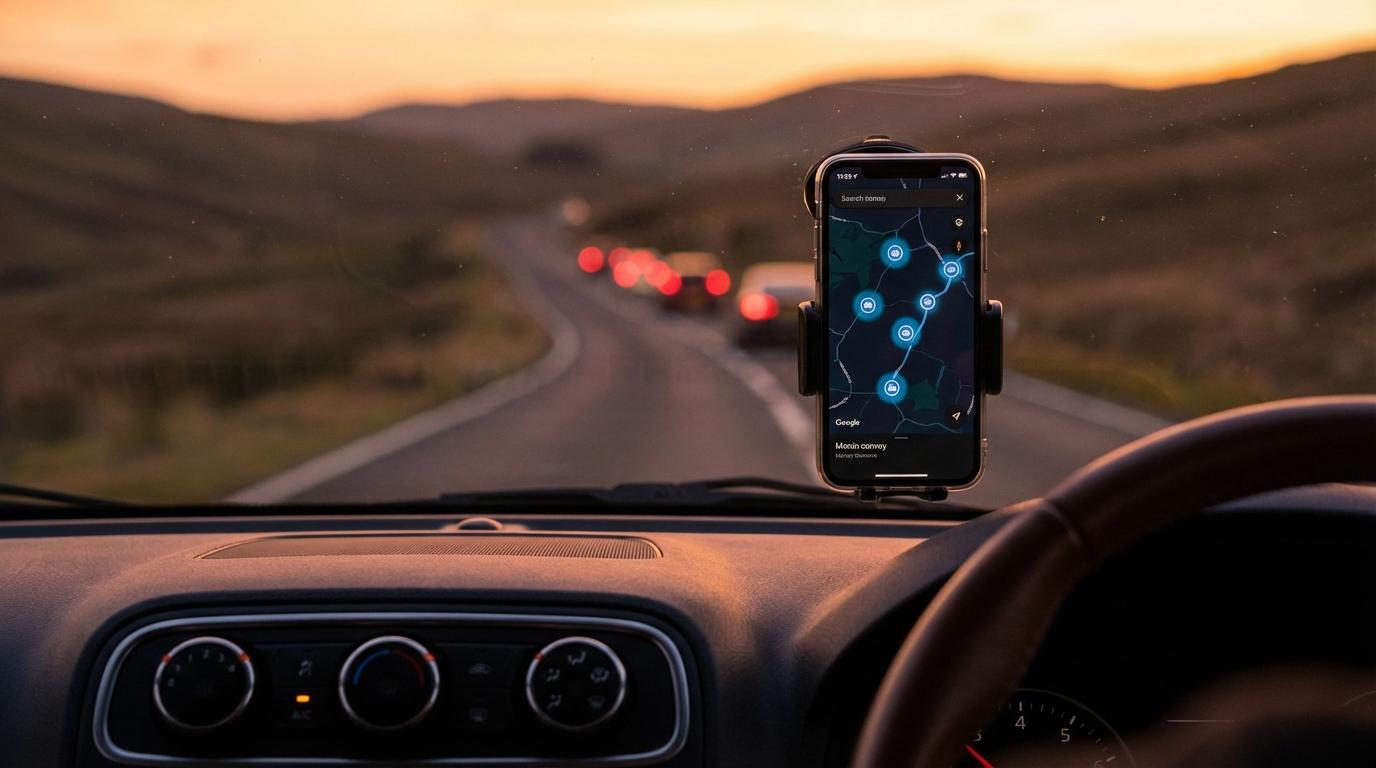
The big difference with a real-time convoy tracking app is that most of the information never has to be typed. Everyone’s phone shares its location, so each driver sees the whole group as dots on one map, moving along with them. If I want to know where Derek is, I look at the map on my mount the way I’d check a mirror (and only when I’d check a mirror) instead of asking the chat and waiting for an answer.
Some alerts happen with nobody touching a phone at all. In Konvoyage, if someone drops far enough back, the group gets an alert with their name saying they’re falling behind, along with how big the gap is. When a car sits still for a while, the alert says that person has stopped, and another one follows when they’re moving again. There’s also one for when someone may be off route. I wrote about what happens when a red light splits your convoy, and that’s where the falling-behind alert has been most useful for us.
For the things software can’t guess, there are quick action alerts. One tap sends “Wait for me” or “Go ahead without me” to the whole group, and a separate button reports police, which puts a POLICE AHEAD banner on everyone’s screen. Nobody composes anything, and nobody on the receiving end has to open a thread to understand it.
I’m strict about one thing, because tapping a button still means touching the phone. If there’s a passenger, the passenger sends quick messages. When I’m alone in the car, I wait for a red light or a stop. And if it can’t wait and I can’t pull over, I leave it, because everyone can see where I am on the map anyway and will work it out.
I’ve written about which notifications are worth hearing while driving, and convoy alerts are most of my list. They always look the same, and autocorrect can’t touch them.
The first drive without the chat
On the first trip after I switched, I realized about forty minutes in that I hadn’t touched my phone. I’d love to call that discipline, but mostly there was nothing to check. Everyone was on the map on my dash, and when Derek pulled off for gas, I saw his dot leave the highway, and a minute or two later the alert that he’d stopped showed up. It was strangely quiet. I kept reaching for the phone out of habit and finding nothing new on it, and it took a few drives before that stopped feeling like I’d forgotten something.
Where alerts fall short
Alerts aren’t a conversation. A “has stopped” alert won’t tell you whether it’s a flat tire or a bathroom break, and “falling behind” can mean traffic as easily as a wrong turn. For anything that needs actual words, I still want a passenger with a phone, or a quick call once somebody is parked.
How we run convoys now
Planning still happens in the group chat, just while everyone is parked. Before anyone starts an engine, I create the trip, drop the trip code in the chat, and we wait until every dot shows up on the map. If someone’s dot is missing, we sort it out in the parking lot, not on the on-ramp. This is also when we agree on the boring stuff that used to happen by text halfway down the highway: who rides shotgun in each car and handles the phone, and where we meet if the group gets split. (I pick a gas station or rest area on the route, ideally one with real bathrooms.) If someone misses that meeting point, the plan is that they keep following their own navigation to the destination and we find them on the map, instead of anyone turning around to look for them.
Phones go in mounts before we leave. Mine is a RAM X-Grip on a suction base, low on the windshield where the map sits near my line of sight without blocking anything. Setting it up in the driveway means I’m not adjusting it on the highway (which I have done, and which was stupid).
Once the wheels are rolling, the chat goes on mute.
This is the rule people push back on. My brother-in-law insisted for a whole weekend that he could handle a quick read, and to be fair, most of the time nothing happens. I tell him about Derek and the guardrail, and that the message Derek was reading was mine. That usually ends the argument, or at least moves it to the parking lot.
During the drive, the alerts decide what I do. Someone falling behind gets no text from me. I ease off or pick the next exit to wait, since they can see exactly where I am. If a car has stopped and doesn’t start moving again, my passenger calls them, and if they still don’t pick up, we pull over somewhere safe and call from there. A police alert means I check my speed and keep my hands where they are.
When we arrive, the chat comes back to life with photos and arguments about dinner.
If you want to try this on your next drive with friends, put the trip code in the group chat while everyone is still parked, then mute the chat until you get there.